Forever Chemicals (PFAS): The Short Story of the Poison in Our Blood
PFAS, or forever chemicals, are in rain, rivers and nearly everyone's blood. A short, sourced story of how it happened and what it means for Bangladesh.

In this article (9 sections)
Polar bears, river fish, rainwater and almost every human being on Earth now share one thing: traces of a chemical family that nature never made. They are called PFAS, and most people have never heard of them.
Here is the short story of how they got everywhere, and why it matters for us in Bangladesh.
What makes them "forever"
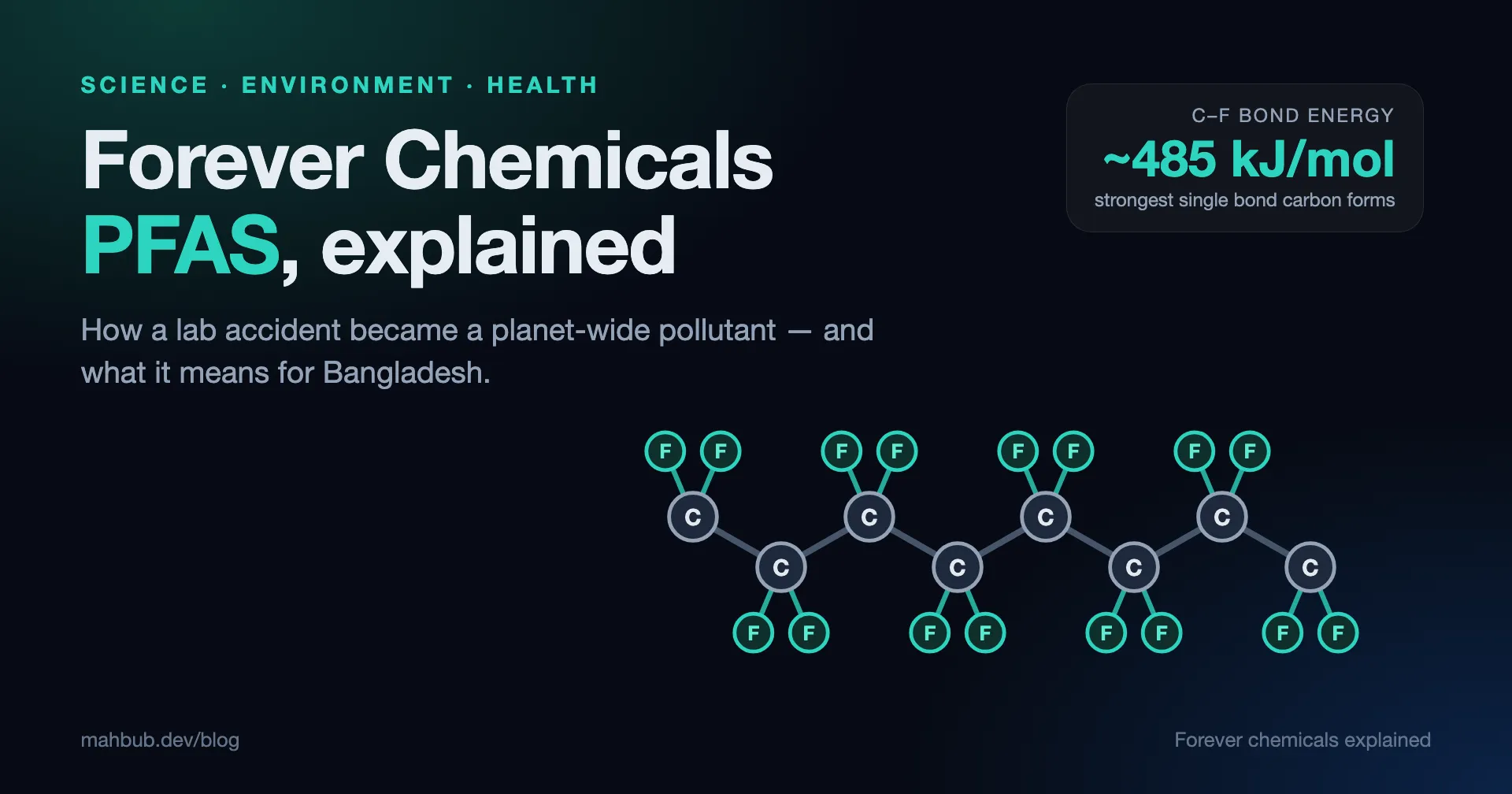
PFAS (per- and polyfluoroalkyl substances) are carbon chains wrapped in fluorine. The carbon–fluorine bond is the strongest single bond carbon can form. Water, acid, heat, bacteria and enzymes cannot easily break it.
That is great for a frying pan and terrible for the planet. Once released, PFAS barely degrade, so they keep piling up in soil, water and our bodies. Hence the nickname: forever chemicals.
An accident that built an industry
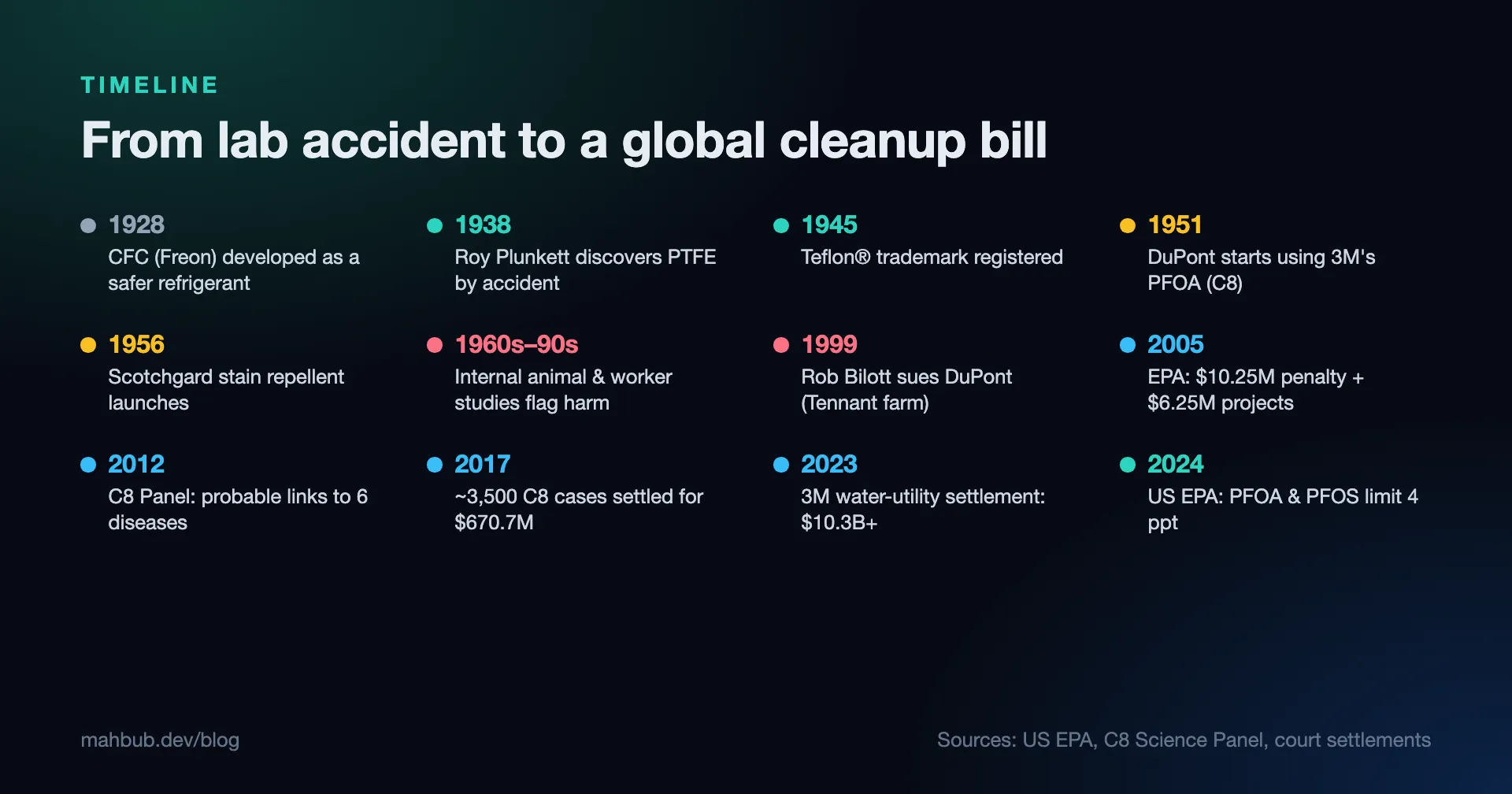
In 1938, DuPont chemist Roy Plunkett opened a gas cylinder of tetrafluoroethylene and found nothing came out. Inside was a slippery white powder that refused to react with almost anything. It was PTFE, later sold as Teflon.
It first sealed equipment in the Manhattan Project, then moved into homes as non-stick pans. From 1951 DuPont used a 3M chemical, PFOA (also called C8), to make Teflon faster. In 1956 3M launched Scotchgard, built on a cousin chemical, PFOS. Waterproof, stain-proof and grease-proof products followed.
The cows that exposed a secret
In the late 1990s, West Virginia farmer Wilbur Tennant watched his cattle die one after another: foaming mouths, blackened teeth, tumours. His creek ran beside a DuPont waste site.
Lawyer Rob Bilott took the case in 1999 and dug through DuPont's internal files. They showed the companies had animal and worker studies pointing to harm from C8 for decades, without telling the public.
What followed:
2005: the US EPA settled with DuPont for a $10.25 million penalty plus $6.25 million in environmental projects, its largest administrative penalty at the time.
2012: an independent C8 Science Panel, after studying about 69,000 people, found probable links to six diseases: kidney cancer, testicular cancer, thyroid disease, high cholesterol, ulcerative colitis and pregnancy-induced high blood pressure.
2017: DuPont and Chemours settled around 3,500 personal-injury cases for $670.7 million.
2023: 3M agreed to pay at least $10.3 billion to US public water systems. 3M says it stopped making PFAS at the end of 2025.
The story became the 2019 film Dark Waters.
How it reached everyone
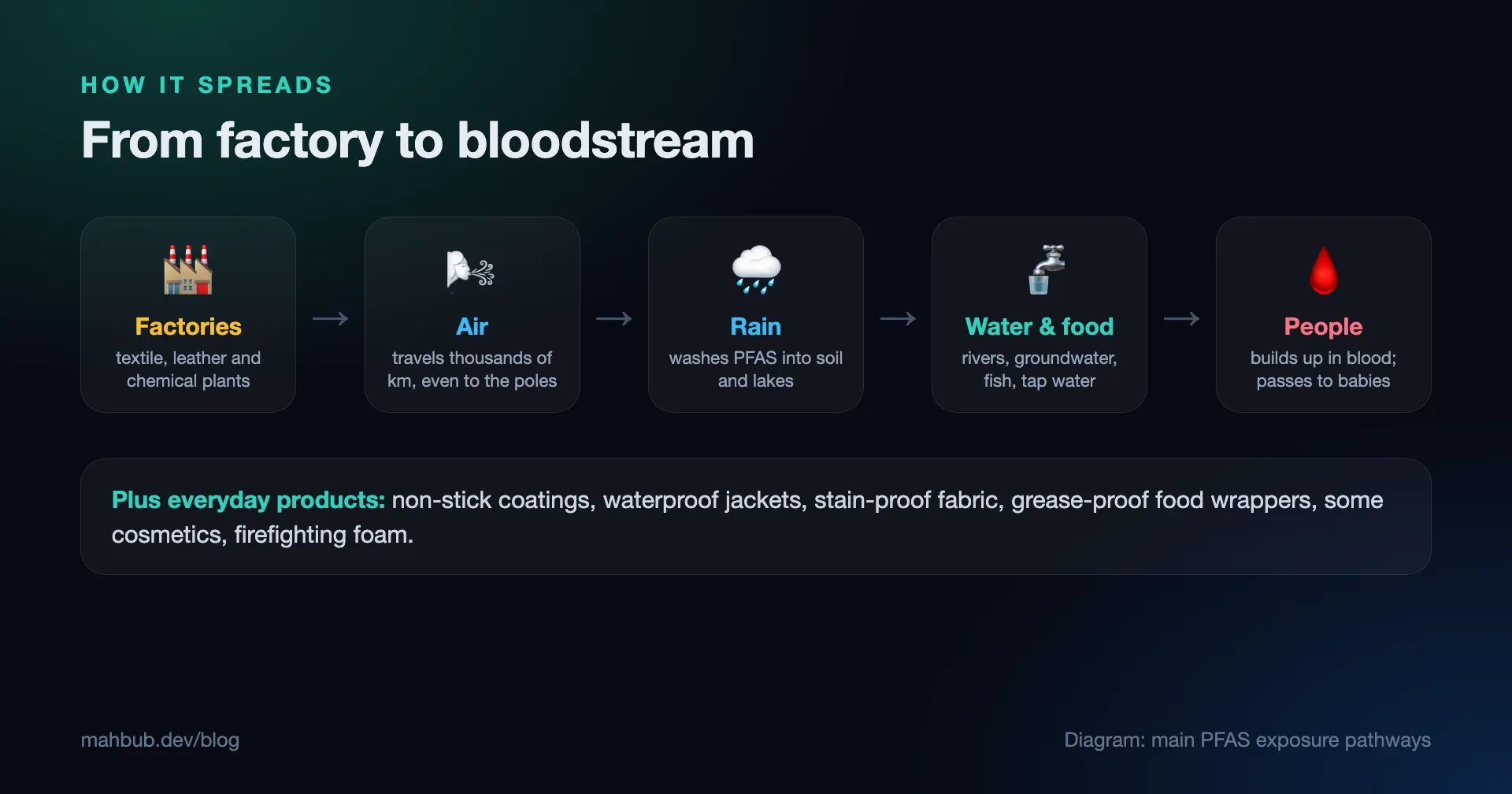
PFAS leave factories through smoke and wastewater. They drift on air currents, fall with rain, soak into groundwater and end up in fish, crops and tap water. Babies can be exposed before birth and through breast milk.
In 2022, Stockholm University researchers concluded that PFAS levels in rainwater almost everywhere exceed some of the strictest current drinking-water guidelines, even in Antarctica.
Bangladesh: the textile problem
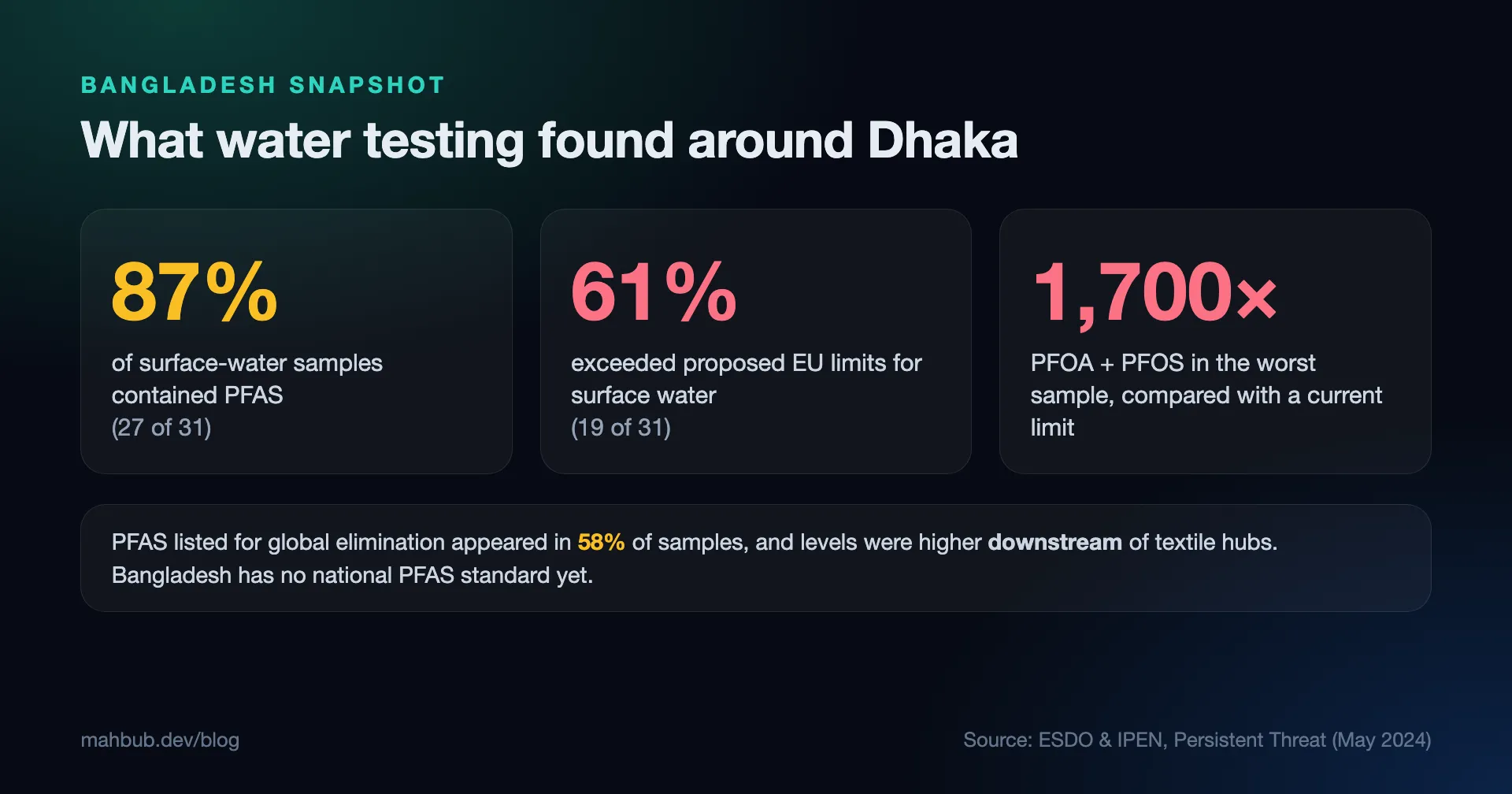
Our garment industry dresses the world, and waterproof and stain-resistant finishes often rely on PFAS. A 2024 study by ESDO and IPEN tested water around Dhaka's textile hubs:
PFAS were found in 27 of 31 surface-water samples.
19 exceeded proposed EU limits for surface water.
The worst sample had PFOA and PFOS more than 1,700 times above a current regulatory limit.
Levels were higher downstream of industrial areas.
Earlier research by the University of Rhode Island and the University of Dhaka also found PFAS in Dhaka's air. Standard effluent treatment plants are not built to remove PFAS, and Bangladesh has no national PFAS standard yet.
How little is too much?
The US EPA's 2024 limit for PFOA and PFOS in drinking water is 4 parts per trillion each. One part per trillion is like one second in about 32,000 years. Because PFAS build up in the body, even tiny daily doses add up over time. The WHO's cancer agency (IARC) classified PFOA as carcinogenic to humans in 2023.
What you can do today
You cannot avoid PFAS completely, but you can cut exposure:
Replace scratched or peeling non-stick pans; use stainless steel, cast iron or glass.
Avoid grease-proof fast-food wrappers and microwave popcorn bags.
Check labels for PTFE or anything with "fluoro", especially on waterproof makeup.
Be cautious with "waterproof" or "stain-proof" clothing, shoes and furniture treatments.
Avoid fish from rivers next to industrial zones.
If you filter drinking water, activated carbon and reverse osmosis filters can reduce PFAS.
The real fix
Personal choices help, but the solution is policy. The 1987 Montreal Protocol showed the world can phase out a harmful chemical class together. PFAS need the same treatment: limit them to truly essential uses, make polluters pay, and set clear national standards, including in Bangladesh.
Until then, the clock keeps ticking, one part per trillion at a time.